

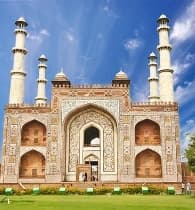
The Mausoleum of Emperor Akbar
Akbar TombSikandra, Agra
Akbar's Tomb at Sikandra is one of Agra's most remarkable Mughal monuments. Set within expansive gardens, the mausoleum reflects Emperor Akbar's vision through a distinctive architectural composition of red sandstone, marble, intricate ornamentation and monumental gateways.
Akbar selected the site and began the construction of his own mausoleum during his lifetime. After his death, his son Jahangir completed the monument in 1613, adding elements that showcase the evolving character of Mughal art and architecture.
The Story ofEmperor Akbar
The mausoleum at Sikandra was conceived by Emperor Akbar himself as his final resting place. Its architecture is particularly notable for bringing together influences from different artistic and cultural traditions.
After Akbar's death, his son Jahangir completed the tomb. The resulting monument combines red sandstone, marble, geometric ornamentation, carved details and expansive Charbagh gardens into a distinctive expression of Mughal architecture.
Akbar's Vision
The emperor personally selected the site for his mausoleum.
1613
Jahangir completed the mausoleum after Akbar's death.
Cultural Fusion
Hindu, Islamic and Persian influences appear throughout the monument.
A Monument ofMany Traditions
The tomb is surrounded by a Charbagh garden and approached through monumental gateways. Its five-tiered pyramidal form, chhatris, minarets, iwans and decorative surfaces create a silhouette unlike many other Mughal mausoleums.
Intricate jali work, mosaics, calligraphy, geometric inlay and carved stonework demonstrate the exceptional craftsmanship of the period. The combination of different architectural influences gives Sikandra its distinctive identity.
“Where Akbar's vision lives on in stone, symmetry and craftsmanship.”
Continue your journey throughMughal Agra
Discover more historic destinations around Agra and experience the architecture, stories and heritage that shaped this remarkable city.
Explore All Destinations