
About Taj Mahal
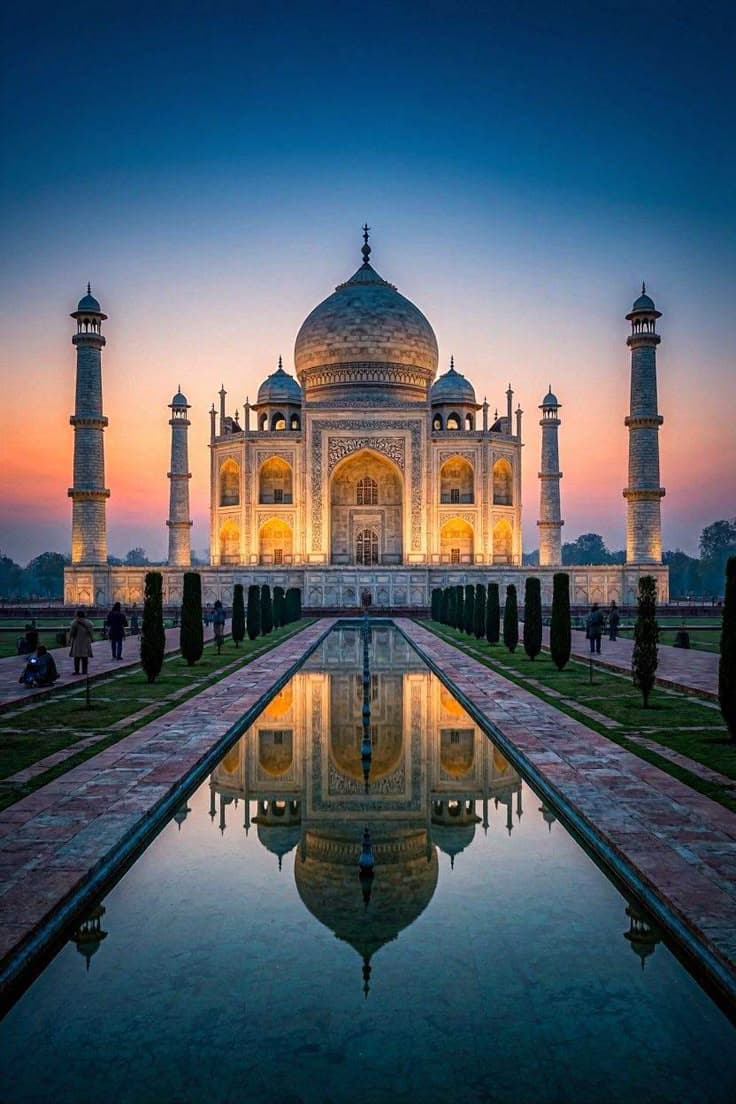
Agra, India
The Monument of Love
A timeless symbol of love & beauty
The Taj Mahal is more than an architectural masterpiece. Standing gracefully on the banks of the Yamuna River in Agra, it is one of the world's most enduring symbols of love, remembrance and artistic excellence.
Commissioned by Mughal emperor Shah Jahan in memory of his beloved wife Mumtaz Mahal, the monument represents a remarkable meeting of architecture, craftsmanship and emotion. Its white marble surfaces, harmonious proportions, delicate ornamentation and magnificent gardens create a sense of balance that has captivated visitors for centuries.
From the intricate inlay work of precious and semi-precious stones to the elegant symmetry of its domes, arches and minarets, every detail reflects the extraordinary skill of the artisans who brought Shah Jahan's vision to life.
Agra, India
Banks of the Yamuna River
Mughal Era
A masterpiece of Mughal architecture
A masterpiece born from eternal devotion
The story of the Taj Mahal begins with the extraordinary relationship between Emperor Shah Jahan and Mumtaz Mahal. Their story of love and companionship became the inspiration for a monument unlike any other in the world.
After the passing of Mumtaz Mahal, Shah Jahan envisioned a memorial that would preserve her memory for generations. What followed was one of the greatest architectural achievements of the Mughal era, bringing together master craftsmen, architects, calligraphers and artists from across the region.
The result was a harmonious composition of white marble, monumental domes, elegant minarets, intricate pietra dura inlay and beautifully planned gardens. Together, these elements transformed a deeply personal story into a universal symbol of love.
Shah Jahan
The Mughal emperor behind the vision of the Taj Mahal.
Mughal Architecture
A remarkable fusion of Persian, Islamic and Indian design.

Mughal Heritage
Where love became architecture